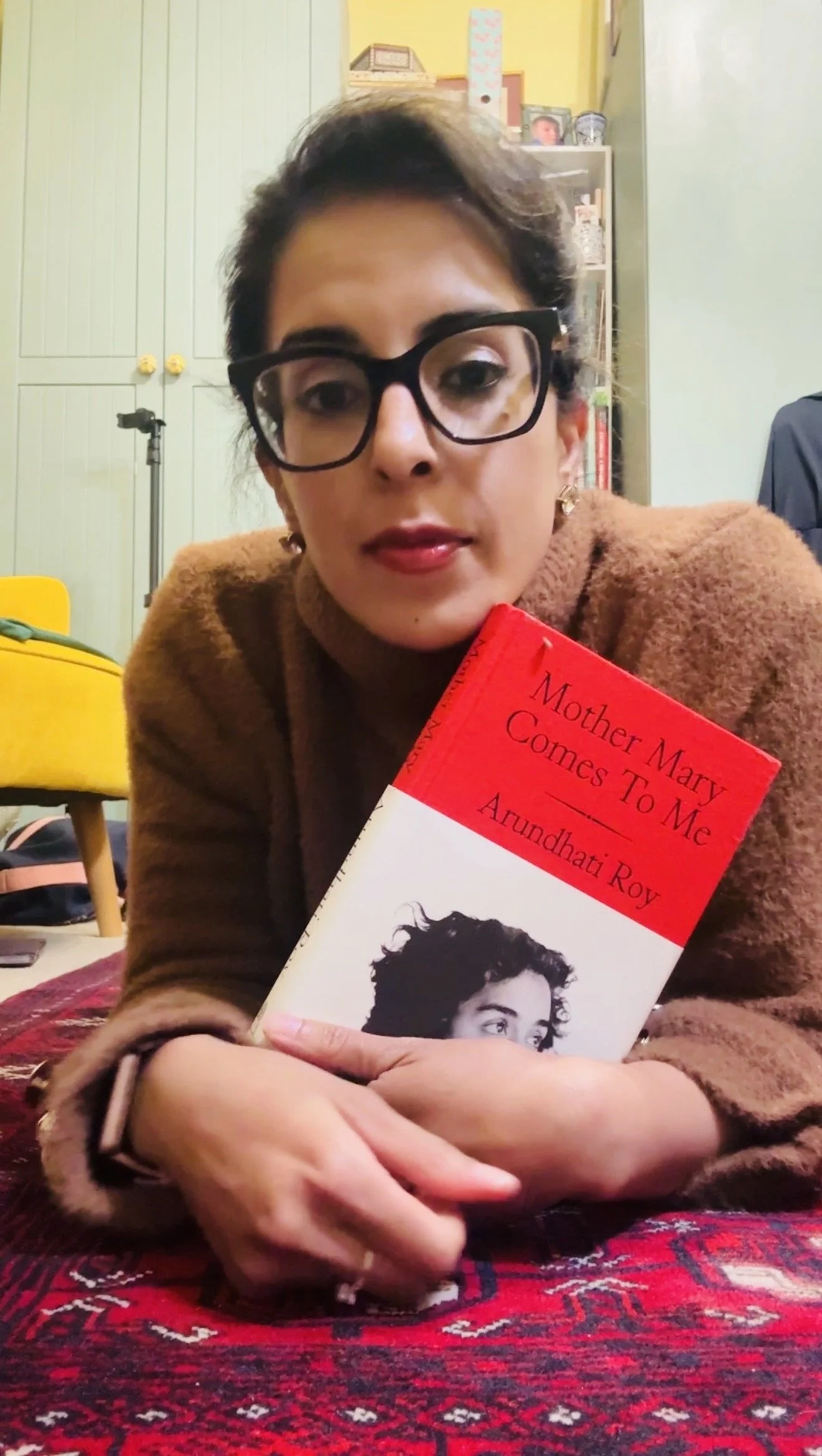
Arundathi Roy’s autobiography, ‘Mother Mary comes to Me:’ A story of love and hate
Arundathi Roy, known for her activism and award-winning writing, has been in the public eye from as far as I can remember. Her voice on issues shaping our world had been a beacon in such dark times. From the 1990s she has been speaking out about Hindu nationalism, and the dangers it posed with the destruction of the Babri Mosque in 1992and then the election of a coalition far fight government in India.
She also lent her voice and platform to rural people in India who were having their homes destroyed by the creation of big dams; making her a persona non-grata with India’s establishment.
Visiting Kashmir, she raised her voice about what she said looked like an Indian military occupation. Writing about it in the book she asserted, “every piece of news that comes out of the Kashmir Valley is censored or twisted around to suit the Indian government’s narrative. Every Kashmiri Muslim journalist is on notice. People are blackmailed, intimidated or bribed into spying on one another and becoming informers.“
In addition, Roy has been an advocate against global Islamophobia, stating that it was already happening before the so-called ‘War on Terror’ in India. When 9/11 happened. As tragic as it was, Roy says that it didn’t happen in a vacuum. And that “International Islamophobia arrived like a gift from God to Hindu nationalists in India.”
And her activism on Palestine has also been noted, she is not afraid to speak up about the inhumanity happening there.
I have long admired Roy, and read ‘God of Small Things’, and the ‘Ministry of Utmost Happiness’ and really love the way she uses fiction to tell stories of social hardship and inequalities.
It was with this basic knowledge in mind that I read the autobiography, and was fascinated to read more details about her life and what shaped this groundbreaking and fearless writer.
The book goes into detail about Roy’s early life, painting a stark picture of a broken home. Her father was an alcoholic who disappeared when she was 3 years-old, and her mother was abusive.
Roy’s mother was a power house of a lady - who was a teacher that went on to set up her own school that educated the children of their village, guiding them to be successful adults.
Her mum took on and won a legal case striking down the Travancore Christian Succession Act, giving Christian women in Kerala equal rights in their father’s property. This was done in response to the feud in her own family over property succession.
The school was hugely successful, and her mother was a wonderful mentor and teacher to the children but to her own children she was angry, harsh and abusive. When Roy’s brother was old enough, he cut off from his mother. But Roy had more complex feelings, and separates at one point only to be drawn back to her mother. And despite the constant abuse, she just wanted to be loved by her. And in many ways, this book is her expression of love for her mother. She says: “In these pages, my mother, my gangster, shall live. She was my shelter and my storm.”
After leaving home at 16, she faced immense hardships and was psychologically damaged from a rough childhood. It became difficult for her to accept love and security. And although studying architecture in Delhi, her real passion was always writing. She went on to write screenplays, novels and essays but all with the common theme of social commentary and action.
Her activism gene was likely inherited from her mum who took on the Indian legal system, battled for education for boys and girls, and was a strong and vocal woman. This passion for fighting and advocating for the voiceless was where Roy naturally gravitated to. Her written essays and literary works have changed lives and brought hope.
To this day she continues to advocate for humanity and morality. And she doesn’t like identities which stoke division. In the book she says she doesn’t like the question ‘where are you from’ and states: “The more our world fractures into dagger-shaped shards, the more we club each other to death with our genes, our gods, our flags, our languages, the colour of our skin, the purity of our roots, our histories both true and false – the more my answer to that question remains the same. I’m here now. It isn’t a slogan or a solution to anything. Just the personal feelings of an off-grid drifter.”
I thought this book gave a wonderful insight to the life of a woman who has been inspirational to many. It weaves in her life story and the stories behind the books she wrote, giving a deeper understanding to her thought process and the development of an iconic writer.