Victorian England and the Islamic World: Frederic Leighton’s Arab Hall
The Arab Hall at Leighton House is celebrating 100 years.
The first time you step inside, you are transported to Damascus, Cairo, the Ottoman Empire. You could easily believe you are standing in one of the great cities of the Islamic world.
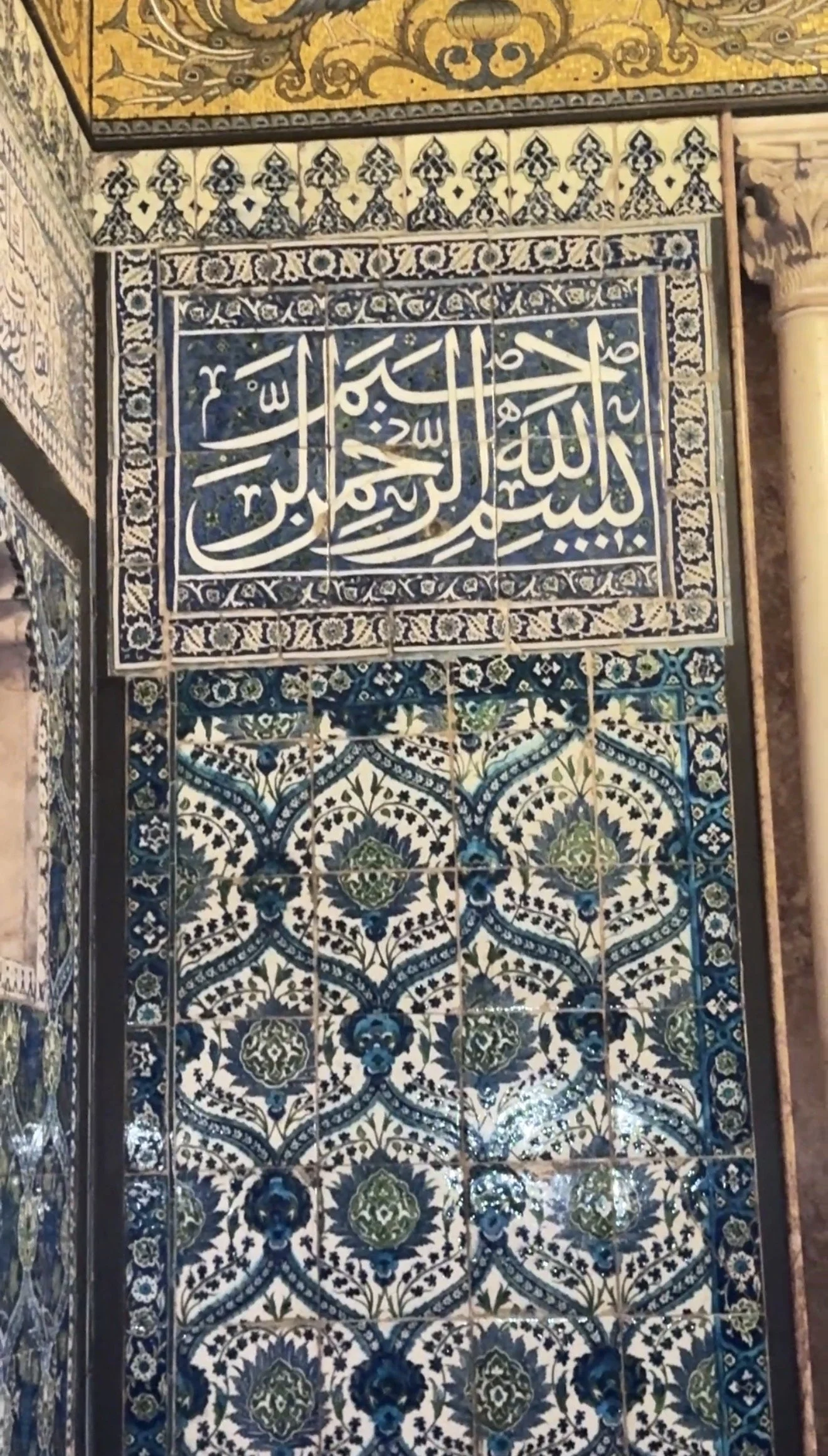
Tiles rise up the walls in deep blues and intricate patterns, the kind that feel familiar if you’ve stood in mosques across the Muslim world, walked through historic cities, or traced the geometry of Islamic art with your eyes.
But this is not Cairo, not Damascus, not Istanbul. This is Holland Park, in London. And this breathtaking, carefully constructed space is the vision of artist, traveller and collector - Frederic Leighton (1830–1896).
Leighton was one of many English figures fascinated by the Muslim world, and his life, as well as that of his contemporaries, reveals that Islam and Muslims were deeply interconnected with England and Europe throughout history.
A talented artist, he moved across Europe from a young age, studied in Paris, spoke multiple languages, and lived among wealth, influence, and cultural power. By 1878, he had become President of the Royal Academy of Arts.
He also travelled extensively through the Muslim world - Cairo, Damascus, Istanbul-observing, sketching, photographing, and collecting. He also visited Sicily and Rhodes, where his collections reflect their little known but deep Muslim heritage. Yet, as Melanie Gibson notes in her book, The Arab Hall: Frederic Leighton- Traveller and Collector, European narratives often obscured this, relabelling Iznik Ottoman tiles from Rhodes as “Rhodian,” subtly distancing them from their Islamic origins.
Leighton collected tiles, textiles, and ceramics-fragments of beauty that would later shape his home. Some were original; others were recreated from his sketches and photographs.
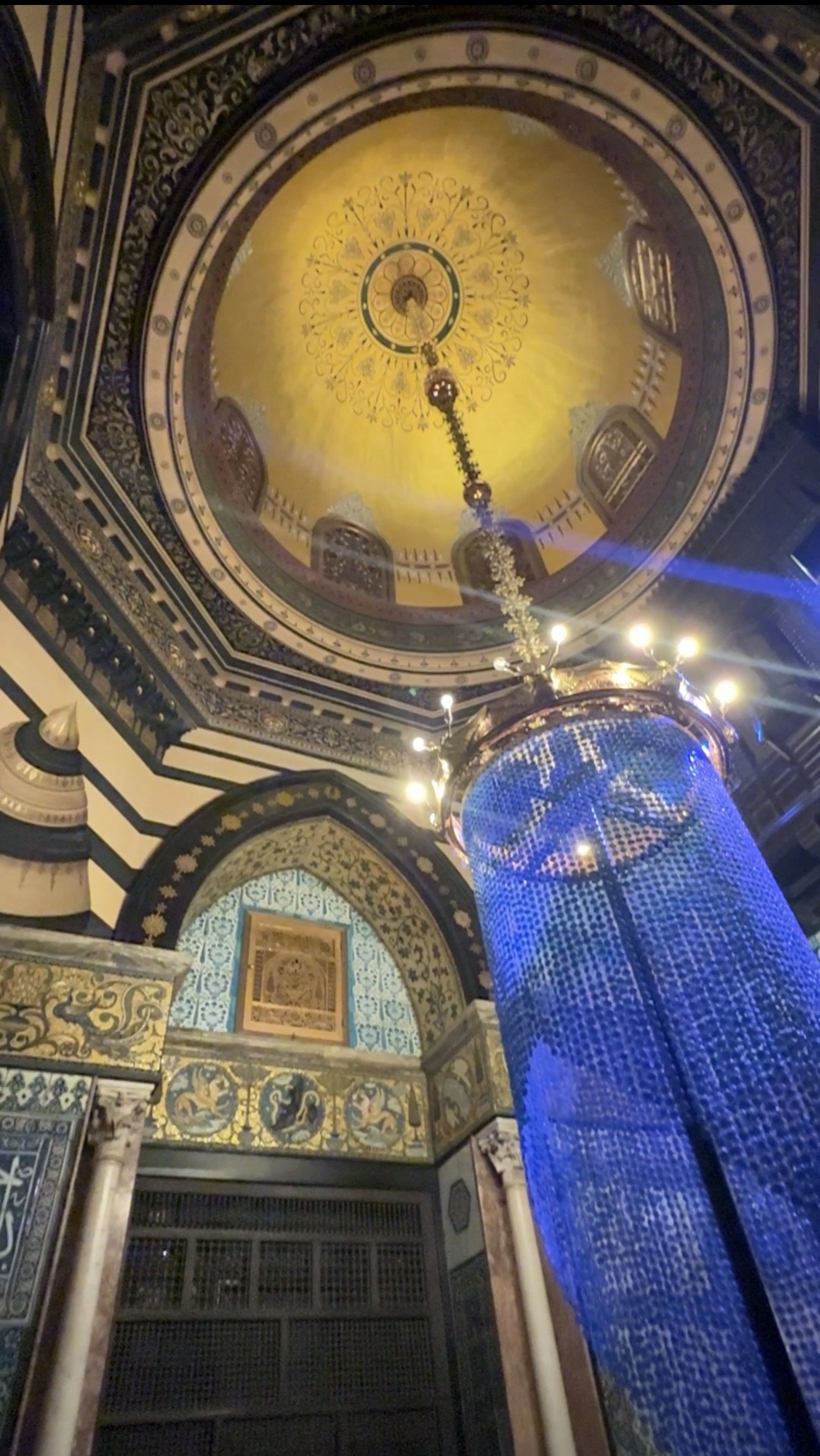
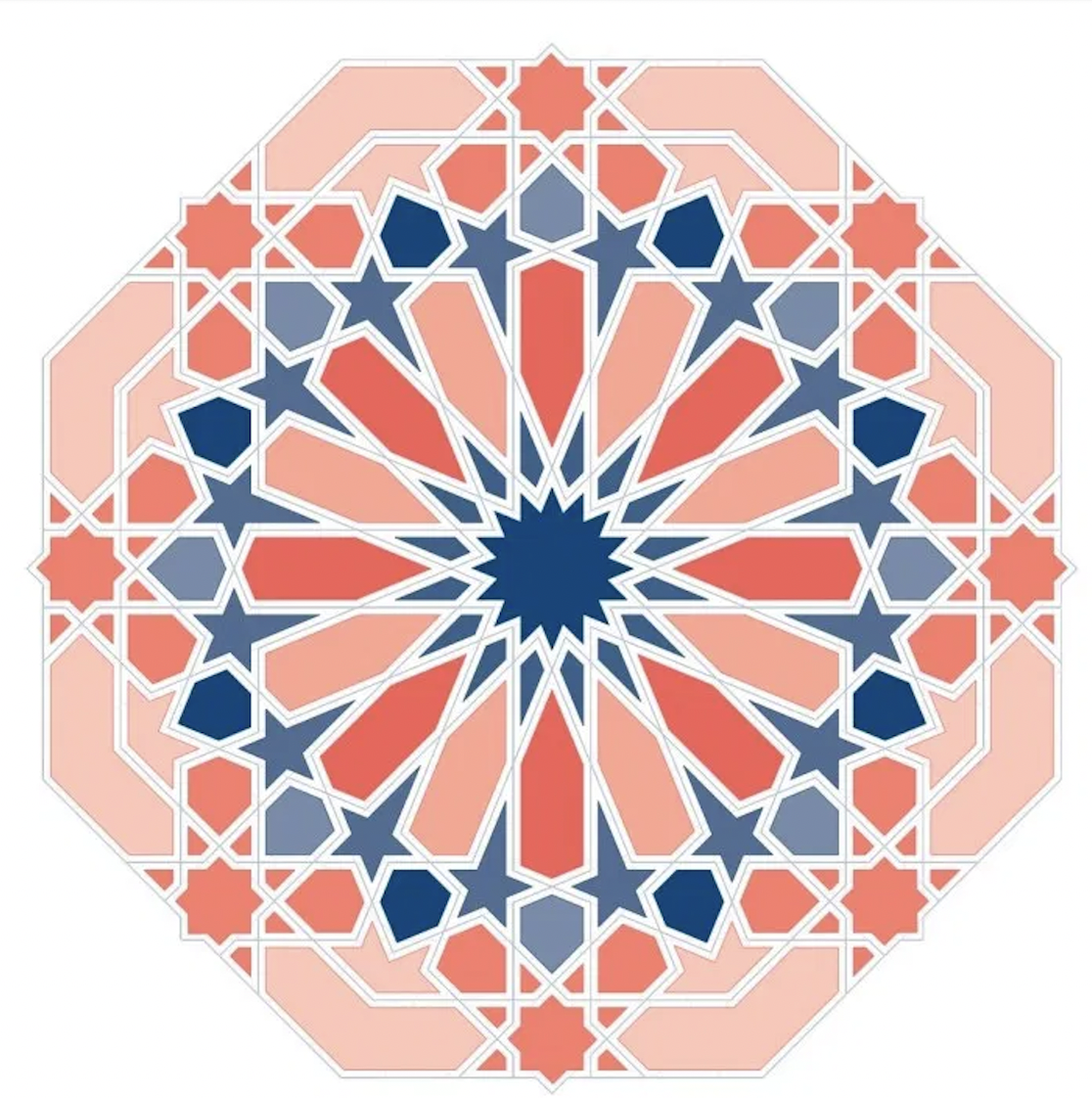
He was especially drawn to Islamic tilework: its beauty and repetition - the way geometry and spirituality meet on a single surface. The staircase of Leighton’s home echoes the blue-and-white tiles of Cairo’s Aqsunqur Mosque. The Arab Hall’s tiles trace their lineage to Damascus. The dome is copied from the Umayyad Mosque. This was not accidental. It was intentional admiration.
Throughout the house are Qur’anic inscriptions and references to Islamic faith. Leighton’s grasp of Arabic, however, was limited-he could not read or write it fluently. Yet would have been aware of the meanings of the inscriptions he selected and chose to surround himself with them.
Verses from Surah al-Rahman in the Qur’an stretch across the walls: “In the name of God, the most gracious the most merciful. It is God the most gracious who taught the Quran. He created man and taught him to communicate. The Sun and the moon follow their calculated courses; the plants and the trees submit to his designs.” But the tiles across the home are from different periods and places arranged into visual harmony rather than textual coherence. What mattered to him was the beauty of the calligraphy.
He clearly loved the Islamic aesthetic, and honoured the beauty in his home. And yet, questions of power and exploitation inevitably arise.
Leighton was a “collector”—but who sold these objects? Who profited from them? And did this collecting deprive local communities of their own heritage?
This was a time when Europe’s relationship with the Muslim world was unequal. Travel was facilitated by empire. Access was shaped by power. So even in admiration, there is imbalance. Even in beauty, there are questions.
By the late 19th century, this fascination with the Muslim world was widespread. The “East” had become fashionable across Britain. Homes filled with carpets from Turkey, ceramics from Iran, and panels from Cairo—objects becoming increasingly available through department stores like Liberty. The Islamic world was admired, studied, and, at times, consumed. Leighton’s Arab Hall was extraordinary, but it was part of a wider cultural moment.
Some other London houses had elements of Islamic design, but there were some like Leighton’s that could be considered extravagant, such as the Damascus Room of Vincent Robinson: the Prince of Wales also made an Islamic inspired room at Marlborough house,
And painter Carl Haag who was a favourite artist of Queen Victoria made a studio closely representing the interior of a gentleman’s house in Cairo.
Although Leighton said he was only interested in arts for art’s sake, his engagement in Muslim art runs deeper than surface-level imitation. He was drawn to moments of coexistence such as in Andalusia under Muslim rule, and 12th-century Palermo, where Islamic, Byzantine, and Christian traditions intertwined. The Arab Hall itself echoes Sicilian-Norman Palce, La Zisa (from the Arabic al-Aziz, “the most precious”).
The entrance to the Arab Hall has crested birds with long beaks in a gold-gilded stone. These are hoopoe birds taken from the story of Solomon and Queen Sheba in the Qur’an; and the central character of the hoopoe in the Sufi story Conference of the Birds by Farid. Al-Din Attar. There are Sufi phrases woven into the space—“what is sufficient for us”; and ‘Bismillah’ inscription inspired by the Dome of the Rock in Jerusalem- one of the holy sites of Islam.
The octagonal drum is inspired by the interior of the Umayyad mosque in Damascus. He added Islamic inscriptions on the windows as well. One of them using a Qur’anic phrase associated with Sufi practice e.g. ‘blessed are our walls’ and ‘what is sufficient for us.’ He also included mashrabiyya windows and a fountain was inspired by homes in Cairo
These were not random choices. They suggest curiosity, reverence, even a kind of longing.
This is not a simple story of extraction. But still-scholar, Edward Said’s words linger in the background. Because admiration does not undo power.
Leighton’s access to these places, objects, and histories was shaped by a colonial reality in which Britain held the upper hand. The Arab Hall is not a replica of a single place—it is a collage. Damascus beside Cairo, Ottoman alongside Sicilian, fragments of a world reassembled in London.
After his death, much of his collection was auctioned off, scattered once again. What remains is the room—and the questions it leaves behind.
What did Islam and Muslims mean to Leighton beyond aesthetics? What does it mean to us now?
Perhaps the Arab Hall tells two stories at once. One of admiration- of a Europe that looked to the Muslim world and saw beauty, sophistication, and artistry worth emulating. And another of rivalry and extraction-of objects removed, meanings rearranged, and cultures reframed through a Western gaze.
Both are true.
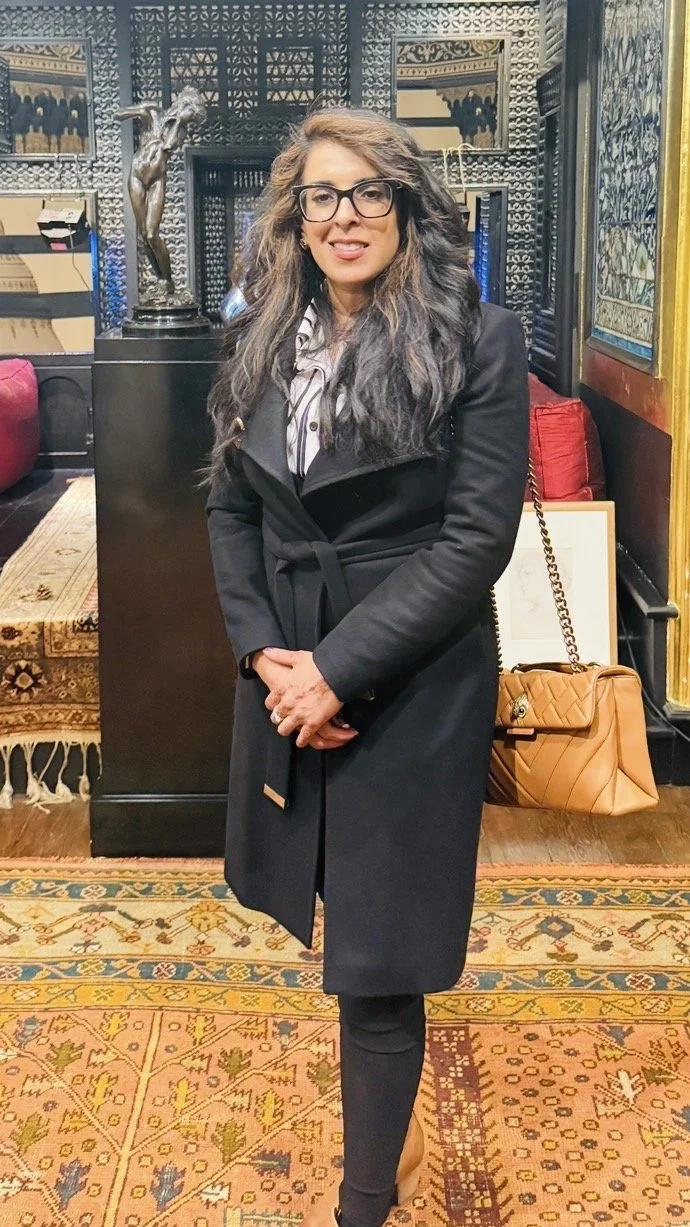
And as I stand in that room - as someone shaped by the histories, cultures, and legacies it draws from- I feel both.
It also makes me think about the Islamophobic rhetoric of today: the framing of Muslims as outsiders, as immigrants, as somehow separate from Europe. When in reality, Islamic history, heritage, and culture have long shaped the Western world as we know it.
Yet instead of admiration and openness, Muslims today are positioned as acceptable targets for suspicion and exclusion.
Why?
Perhaps it is a contradiction-an admiration for aspects of Muslim culture but a deep-rooted hostility and sense of inferiority to a civilisation that once dominated. There is a tension between appreciation and prejudice; influence and denial.
And maybe this is where spaces like the Arab Hall matter.
They remind us that the connection between Europe and the Islamic world is not new-it is centuries old, layered, and deeply intertwined.
The Arab Hall: Past and Present is open at Leighton House (21 March – 4 October 2026) bringing together artists installations, a short film and exhibition display in the first major exploration of this iconic interior.
Informed by groundbreaking new research by Dr Melanie Gibson, the exhibition is accompanied by the fully illustrated book The Arab Hall, Frederic Leighton: Traveller and Collector, available from the museum shop.
Plan your visit to Leighton House, 12 Holland Park Road, London, W14 8LZ.