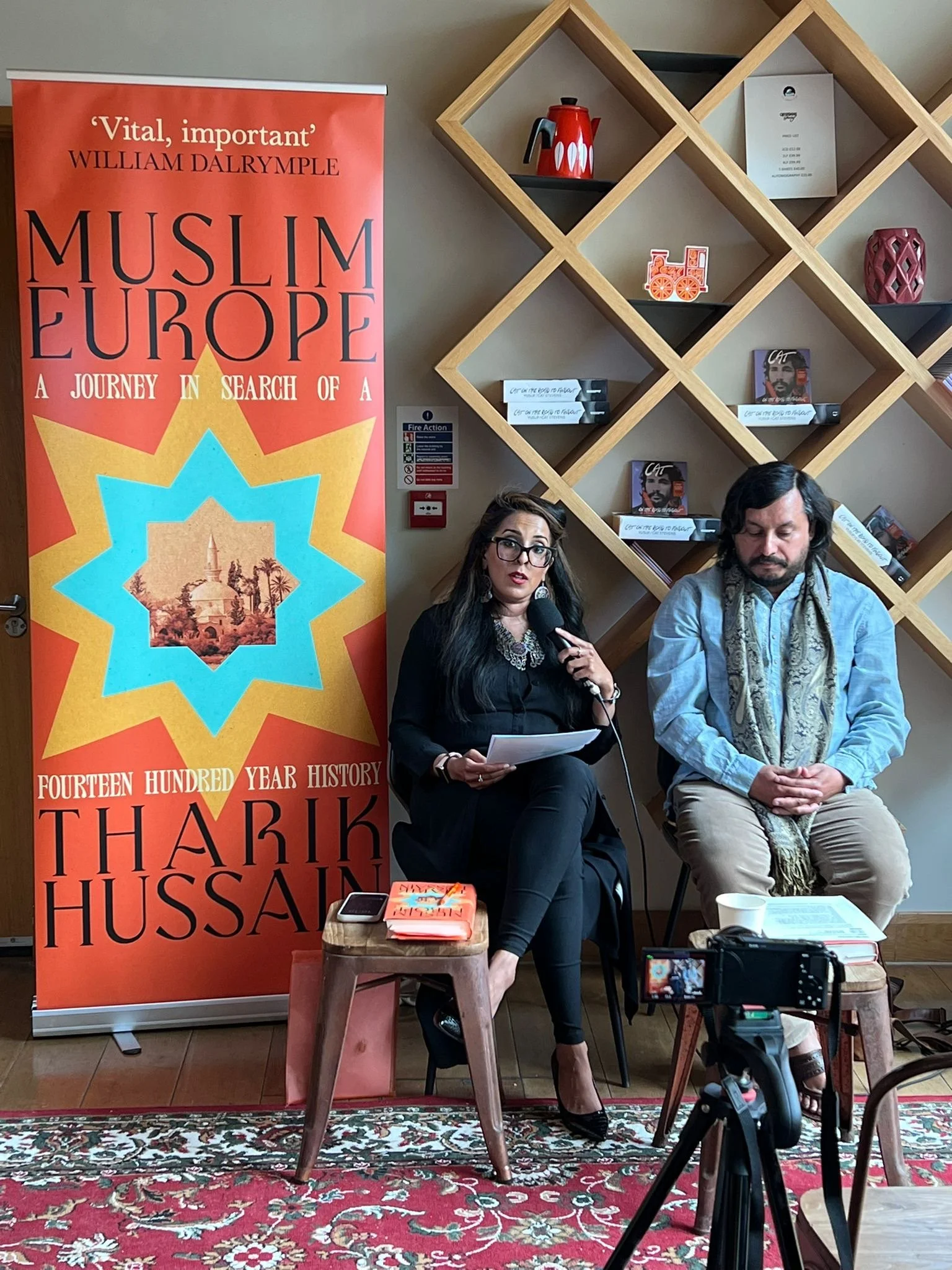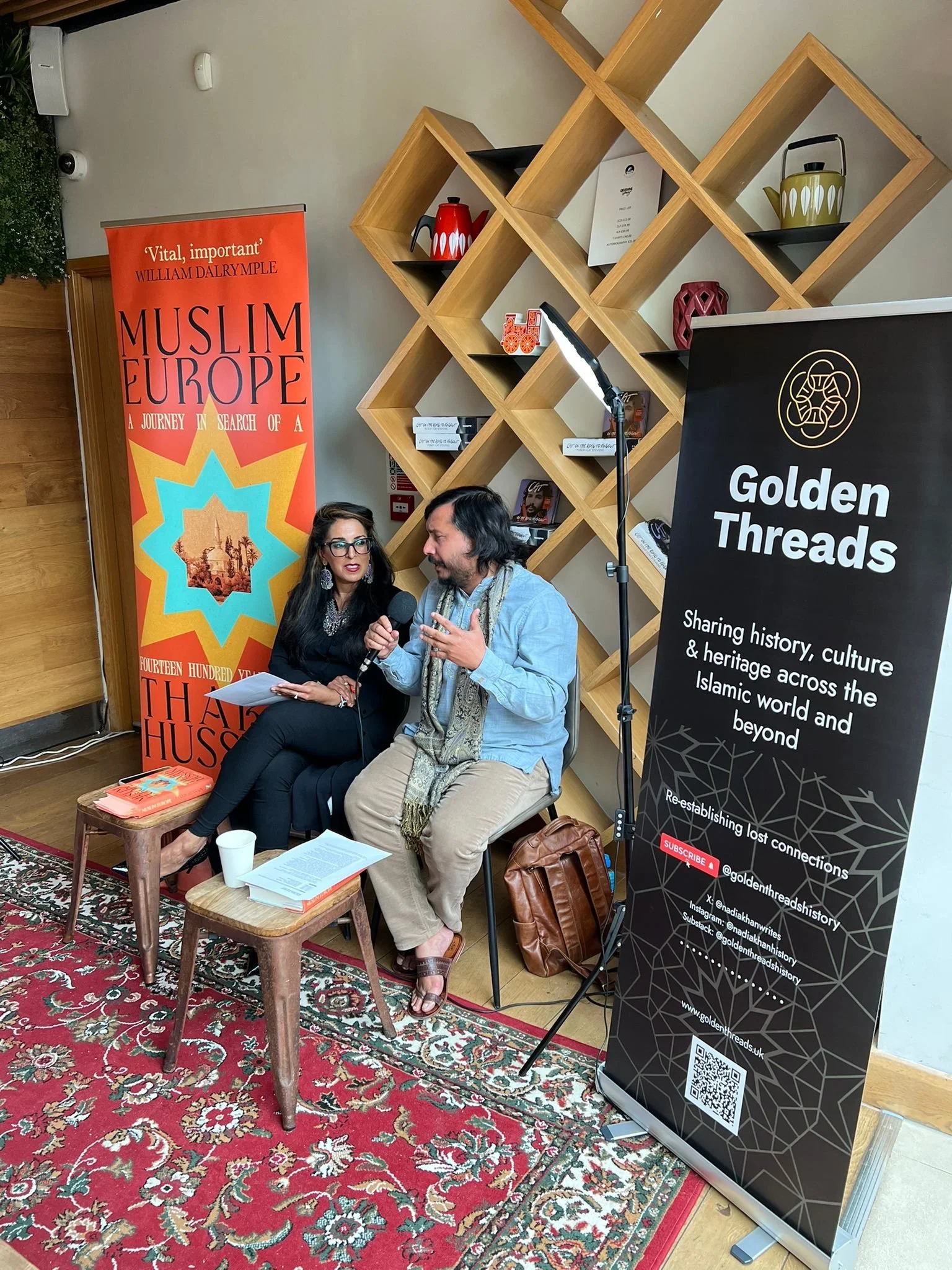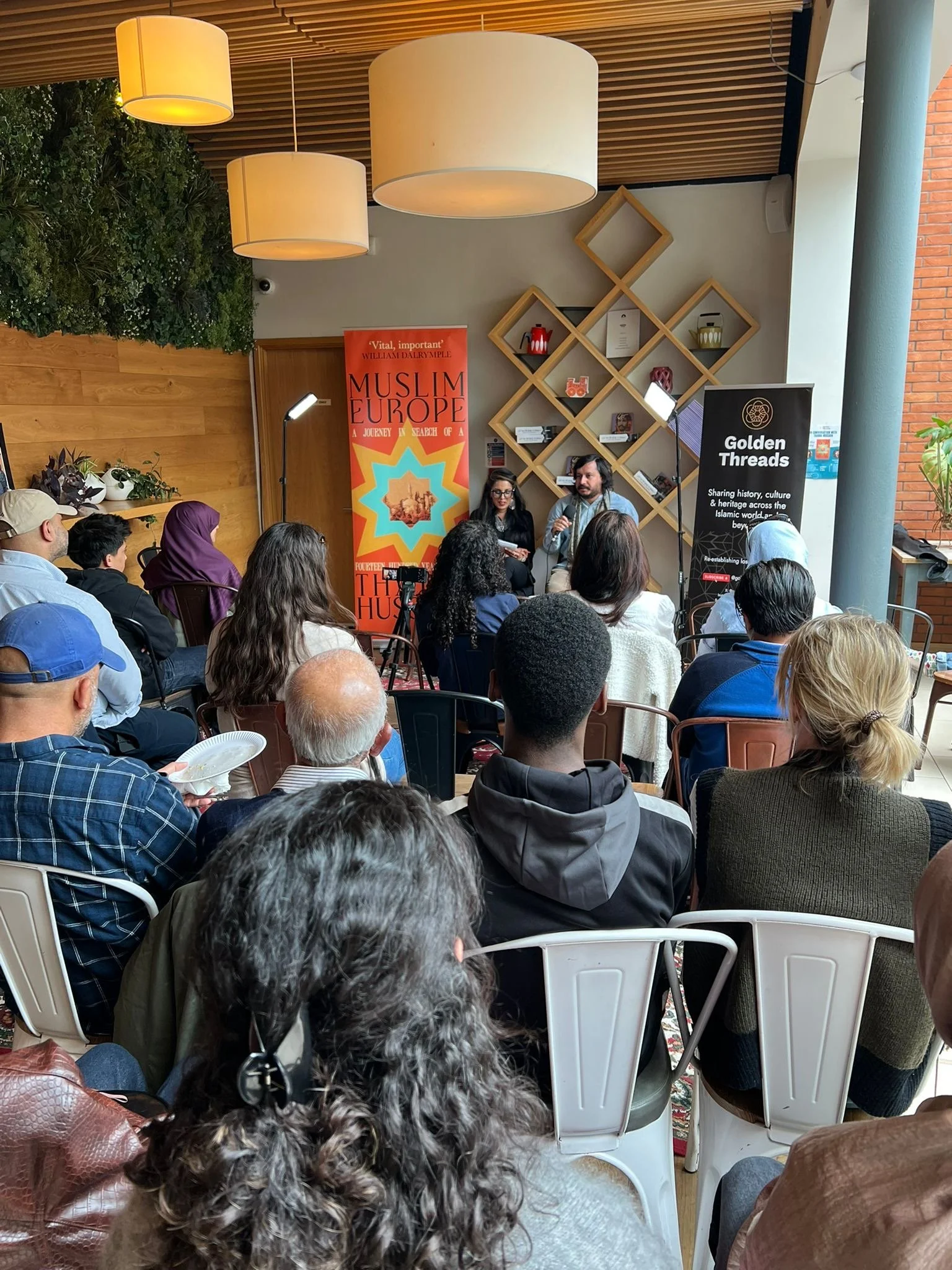
Muslim Europe by Tharik Hussain - Reclaiming a Hidden and Buried Past
Tharik Hussain’s groundbreaking book Muslim Europe argues that Europe carries what he calls an “anti-Muslim DNA” - part of what he describes as “Europe’s intrinsic Islamophobia.” It is a striking claim, but Hussain carefully builds his case, showing how Europe’s deep and influential Muslim history has been buried beneath a narrative that centres only a Graeco-Roman and Judeo-Christian heritage.
Hussain describes the book as the culmination of a two-decade search to uncover Muslim history in Europe. His curiosity began after a trip to Cyprus, where he encountered the story that a relative of the Prophet Muhammad is buried on the island.
According to Hussain, Western history books have long ignored the profound impact of Muslims and Islam on Europe. As he writes, “these books neglect to address the rich tapestry of coexistence, the contributions of Muslim scholars, scientists and artists, and the historical context of anti-Semitism and anti-Islam that affected both Jews and Muslims in Europe.”
One of Hussain’s most important arguments is that Muslims are not strangers to Europe. The continent still includes Muslim-majority countries such as Bosnia and Herzegovina, Albania and Kosovo. Beyond this, many other European nations -including North Macedonia, Serbia, Romania, Bulgaria, Poland, Lithuania and Cyprus have deep Muslim histories and long-standing indigenous Muslim communities.
For Hussain, recovering this history matters not only for Muslims, but for Europe as a whole. It challenges the idea that Muslims are outsiders and instead situates them within Europe’s story from the beginning. He argues that Muslim civilisation played a decisive role in Europe’s intellectual revival after the decline of the classical world.
Throughout the book, Hussain returns to a central theme: Muslims, Christians and Jews have lived, worked and built together in Europe for centuries. Under Muslim rule, persecuted Jewish communities often found sanctuary. In places such as Al-Andalus, Sicily, Malta, Portugal and Cyprus, the story is not only one of conflict, but also of coexistence, exchange and cultural fusion.
In Cordoba, for example, the famous Mosque-Cathedral still bears the unmistakable marks of its Muslim past. Arabic inscriptions remain visible, and its architecture reflects Umayyad design. Across southern Europe, traces of Muslim civilisation survive in arches, city planning, irrigation systems, bathhouses, agriculture and design. These are details easily overlooked until you know what to look for.
Hussain traces some of the earliest Muslim links to Europe back to Cyprus, which became a stepping stone for Muslim expansion into the continent in the seventh century. He writes about the island’s strong Sufi heritage and figures such as Sheikh Nazim, the renowned head of the Naqshbandi-Haqqani order, who was a native of Larnaca. He also reflects on sites such as Hala Sultan Tekke, associated with Umm Haram, a relative of the Prophet, whose burial place remains an important site of memory and devotion.
Cyprus is only the beginning. In Sicily, Hussain shows how Muslims created a thriving and sophisticated society that left a lasting mark even after Muslim political rule ended. The Arab-Norman rulers who followed, absorbed and adapted Muslim influence, especially in architecture. Palermo’s Zisa Palace is a striking example. Its name derives from al-Aziz, meaning noble or splendid, and the building reflects the deep artistic and intellectual imprint of Muslim civilisation.
This influence extended far beyond architecture. Hussain argues that Muslim advances in science, medicine and philosophy travelled through Sicily into wider Europe. Centres of learning preserved and transmitted this knowledge, helping shape the continent’s intellectual development. He suggests that later European thinkers often inherited ideas from Muslim predecessors without acknowledgement, writing that “Copernicus’s example is typical of how many Christian Renaissance men… were simply plagiarists who had failed to credit their Muslim predecessors.”
Because of close political and dynastic links, these intellectual currents reached England as well. Hussain notes that Sicily became a key route through which England accessed Muslim knowledge. He also points to architectural parallels, arguing that buildings such as Durham Cathedral share features with the Great Mosque of Cordoba and the Aljaferia Palace - a connection also explored by historian Diana Darke.
One of the book’s most compelling contributions is its challenge to the idea that Muslims and Christians were eternal enemies. Hussain shows that European history is filled with alliances, intermarriages and shared cultural life. Conflict existed, but so did cooperation, admiration and exchange.
Malta offers another powerful example. Once part of Muslim Sicily, it still carries the imprint of its Islamic past. The Maltese language, with its deep Siculo-Arabic roots, remains one of the clearest living traces of Europe’s Arabic heritage.
Portugal, too, is revealed as profoundly shaped by Muslim history. Place names such as Algarve and Lisbon preserve Arabic origins, and Muslim rule in parts of Portugal lasted for around five centuries. The region once known as al-Gharb al-Andalus - the western part of Muslim Iberia, left a lasting imprint on Portuguese language, culture and identity.
In Mertola, Hussain finds a community rediscovering its Islamic past since the 1970s. Archaeological work has uncovered a rich history of trade, art and intellectual life. This rediscovery has also begun to challenge older stereotypes. Where festivals once depicted Muslims as barbaric and morally corrupt, newer cultural initiatives present a more balanced and historically grounded view.
Hussain recounts meeting Portuguese students who saw the Muslim presence as transformative. He writes that they believed Muslims brought one of the most advanced cultures Europe had seen since antiquity, turning cities such as Seville, Lisbon and Cordoba into major centres of trade, learning and refinement.
Not far from Cordoba lie the ruins of Madinat al-Zahra, the palace-city built in 936 under the Umayyad caliph Abd al-Rahman III. Hussain presents it as a symbol of the sophistication of Muslim Spain - a centre of political power, artistic patronage and cultural brilliance. He argues that Muslim civilisation shaped not only science and medicine, but also music, fashion and etiquette. Figures such as Ziryab helped define a culture of refinement that influenced Europe in lasting ways.
Yet despite these contributions, much of this history was erased or obscured. Hussain points to the development of anti-Muslim myths in Spanish Catholic culture, such as the figure of Matamoros - literally “Moor-slayer” - and other legends portraying Muslims as violent or immoral. These narratives, he suggests, helped justify exclusion and historical amnesia.
He argues that, as in Cyprus, Sicily and Malta, Portuguese identity and indeed much of European identity, was constructed in opposition to Islam. In that sense, Islamophobia is not new, but historically embedded.
That is what makes Muslim Europe such an important book. It is not just a travelogue or a history text, but a challenge to how Europe understands itself. Hussain asks us to recognise that Muslim history is not external to Europe, but central to it.
To recover that history is not only to challenge Islamophobia - it is to tell a fuller, more honest story about Europe itself.