Remembering Muhammad Iqbal on his death anniversary
Muhammad Iqbal (1877–1938) remains one of the most profound poet-philosophers of the modern Muslim world - a thinker whose ideas continue to shape conversations around identity, faith, and purpose. Often described as the spiritual father of Pakistan, his vision played a key role in imagining a separate Muslim homeland in South Asia.
Born in Sialkot, Iqbal’s intellectual journey took him from India to Cambridge, Lincoln’s Inn, and the University of Munich, where he earned his PhD. Deeply influenced by Sufi traditions - especially through his father, and inspired by thinkers like Rumi, Iqbal developed a philosophy rooted in both spirituality and action.
At a time when Muslims across the world were facing political decline, colonial domination, and a crisis of identity, Iqbal used poetry as a vehicle for awakening. His work wasn’t just artistic - it was intellectual, moral, and deeply political.
His famous poem Shikwa (“Complaint”) is a bold and groundbreaking piece in which he voices the frustrations of Muslims to God, reflecting a community grappling with loss after the collapse of empires like the Mughals. In Jawab-i-Shikwa (“Answer to the Complaint”), the response is striking: the condition of Muslims is not divine injustice, but a consequence of losing their own moral and spiritual essence.
Central to Iqbal’s thought is khudi - the concept of the self. For Iqbal, the crisis of Muslims was a crisis of selfhood: a loss of confidence, purpose, and connection to their own intellectual and spiritual traditions. His message was clear - renewal begins from within. Through action, struggle, and self-realisation, individuals can rebuild both themselves and their communities.
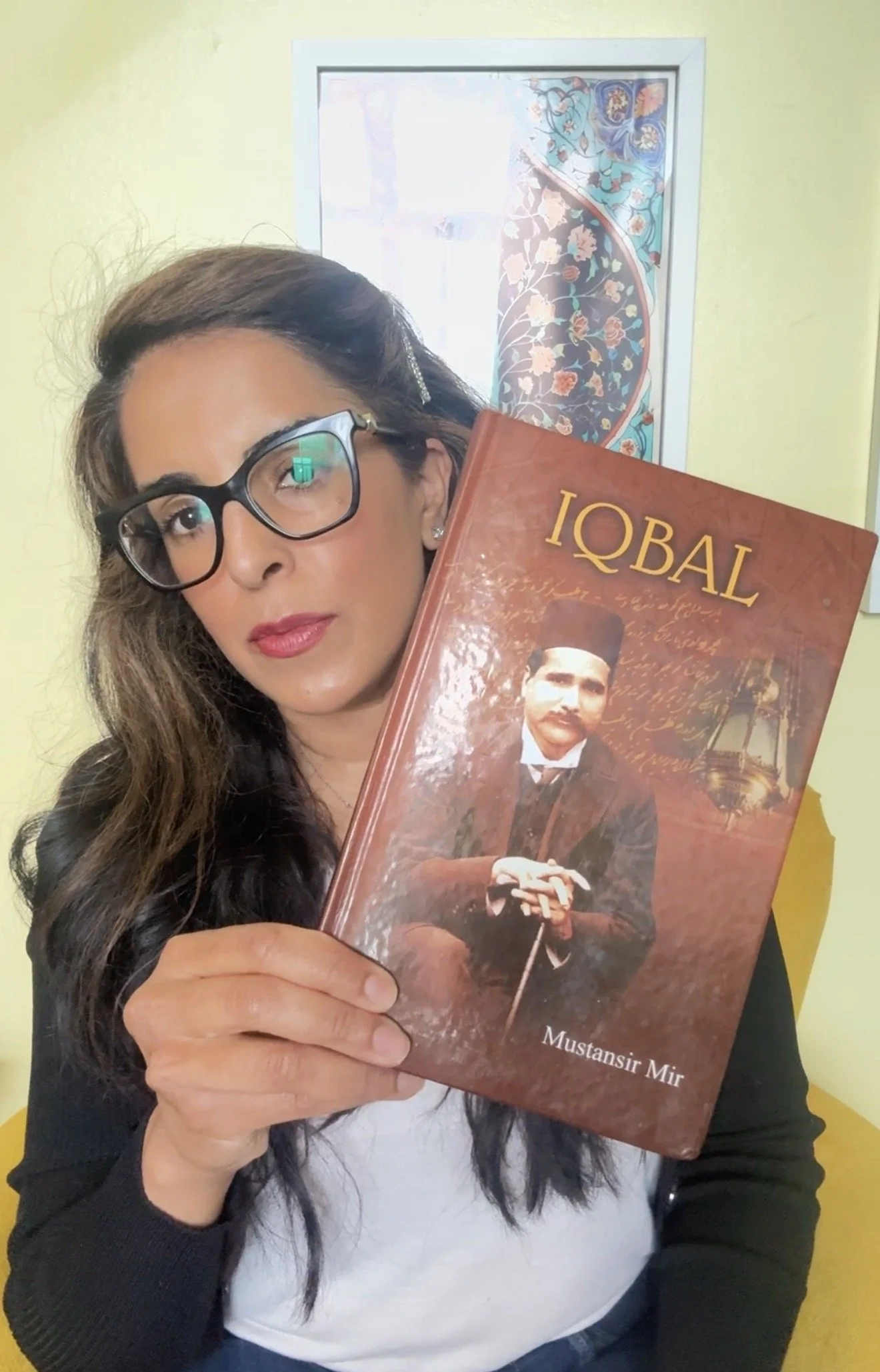
In his book about Iqbal, Mustansir Mir quotes one of Iqbal’s poem: “Muslim should emulate not the moth, which circles alien light, but the glow-worm, which becomes its own lantern.”
He rejected narrow nationalism, seeing it as divisive, and instead emphasised the universalism of Islam - a unifying force beyond race, geography, or ethnicity. At the same time, he believed Muslims must preserve their distinct cultural and religious identity.
Iqbal believed: “A Muslim’s first identity is as a Muslim, not as an Afghan, Turk, or Tartar.” Mir states: “Iqbal attacks territorial nationalism because it is opposed to the religion taught by Muhammad.”
One of the high points in his life was his visit to Cordoba mosque in Spain- now a cathedral. He was the first Muslim in over 700 years to pray there. The visit took him, in his own words “to heights I had never experienced before”. He wrote a poem called Cordoba mosque, one of his masterpieces. It reflected on the unity of Muslims and the time when Muslims ruled Spain.
Iqbal also called for intellectual revival. In The Reconstruction of Religious Thought in Islam, he argued that Muslim societies must engage with modern knowledge while remaining grounded in their own traditions - advocating for ijtihad, adaptability, and a dynamic understanding of faith.
His poetry is rich with symbolism - the eagle representing freedom and self-reliance, the contrast between intellect and love, and the constant call to rise above passivity. He challenged both rigid traditionalism and blind imitation of the West, urging a confident, self-aware path forward.
His work reminds us not only of our heritage, but also of the responsibility to think deeply about who we are, what we stand for, and how we move forward with purpose.