What Prophet Muhammad Can Teach Me About Strategic Communications
Strategic communications is often discussed through modern political or corporate frameworks, yet few figures demonstrate strategic leadership as clearly as Prophet Muhammad
Yes, he was the Messenger of God and received divine revelation. But that alone does not explain his success as a leader. Why him? His leadership was not inevitable, nor purely moral. It was communicative, strategic, and deeply human.
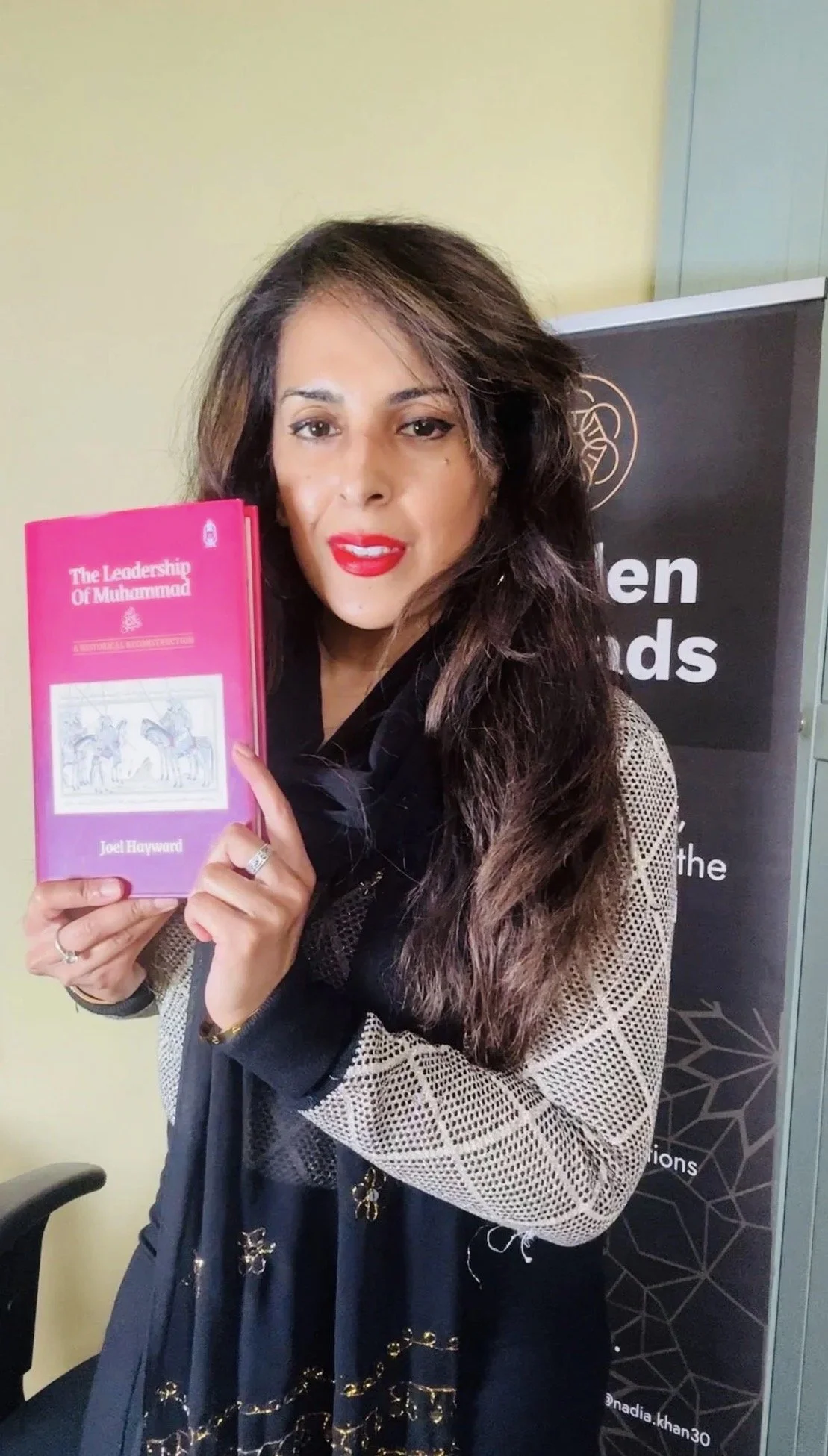
As historian Joel Hayward argues in his book ‘The Leadership of Muhammad.’ the Prophet fundamentally redefined authority. Obedience to his leadership was framed as obedience to God - but it was never blind submission. His followers debated with him openly, and he encouraged consultation and dissent.
They even disobeyed him, most notably at the Battle of Uhud. The Qur’an’s response was striking: it instructed forgiveness and gentleness, not punishment. At the same time, Muhammad understood when leadership required firmness - particularly when treaties were broken or communal cohesion was threatened. Authority, in his model, was balanced: compassionate but decisive.
His legitimacy rested on moral credibility, leading by example, and trust - not coercion. Obedience was explicitly conditional: no instruction was to be followed if it violated justice, faith, or even common sense.
Equally striking was his commitment to consultation (shūrā). Muhammad repeatedly reminded his followers, “I am only human.” Disagreement was not seen as disloyalty but as contribution. Even when he chose a path against majority opinion, the consultative process itself preserved trust and cohesion—an essential principle of effective leadership communication.
As an excellent communicator, Prophet Muhammad instinctively mastered what Aristotle is famous for - ethos, pathos, and logos. His speeches were brief, repetitive for emphasis (key messages), interactive (consultative), and always action-oriented. The khutbah (sermon) became a tool not just of religious teaching but of strategic messaging, while Friday prayer functioned as a regular mechanism for community alignment.
His long-term vision was radical for seventh-century Arabia: an inclusive monotheistic political community that transcended tribes, status and ‘race’ (although that concept didn’t exist then- it was phenotype). The Constitution of Medina bound Muslims, Jews, and others into a single ummah (nation) without forcing religious conformity. It established shared obligations, mutual defence, and ethical norms—demonstrating that unity need not require sameness.
Prophet Muhammad consistently preferred diplomacy over violence. The Treaty of Hudaybiyyah, initially seen by his followers as humiliating, proved to be a strategic triumph that enabled rapid expansion through persuasion rather than force. Conversion was never coerced; the Qur’an is explicit that “there is no compulsion in religion.”
In just 23 years, Muhammad transformed a fragmented and violent society into a stable, legitimate, and morally grounded community. He achieved this not through domination, but through vision, communication, consultation, and trust. And it penetrated hearts, and the message spread far and wide.
The lesson is clear: Prophet Muhammad was not simply a religious figure or saintly icon. He was a strategic communications leader, whose understanding of people, power, and persuasion remains deeply relevant today.
This blog is written for my CIPR (Chartered Institute of Public Relations) Accreditation
Purchase ‘The Leadership of Muhammad’: https://www.waterstones.com/book/the-leadership-of-muhammad/joel-hayward//9781800119895?sv1=affiliate&sv_campaign_id=323889&awc=3787_1768599061_a5c5934edcddc0fab1df9a8b03b9b99e&utm_source=323889&utm_medium=affiliate&utm_campaign=Kiesproduct+%22Google+Shopping+traffic%22